
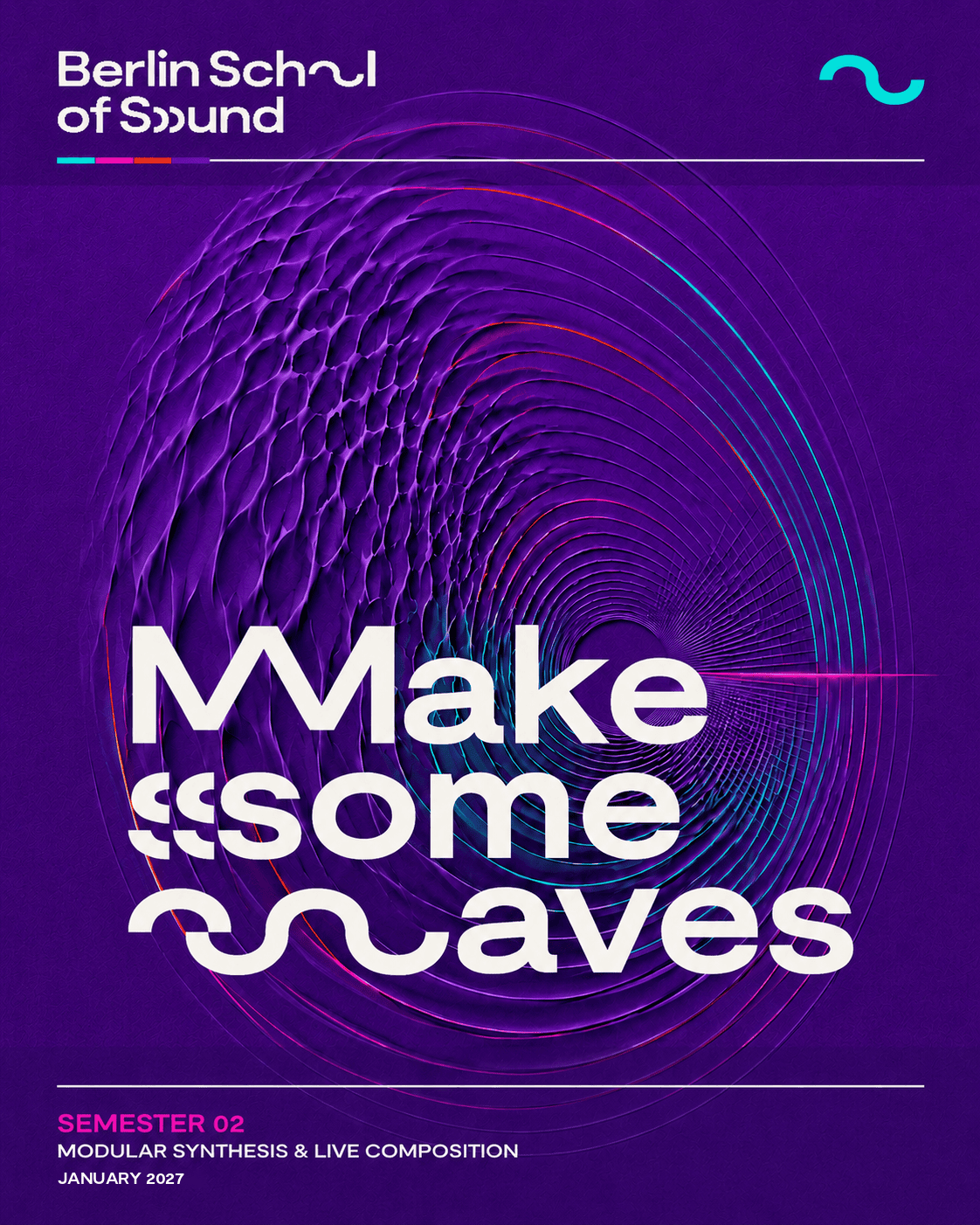
Description
“This journey changed my life. I really appreciate all that I learned from the course.”
Antonio D.F. · Make Some Waves
“The instructors were the real thing — people who actually live this music.”
Make Some Waves participant
Early bird — until 15 December 2026
1.100 € 1.300 €
12 sessions · 48 hours · max 10 students. From 16 December the price is 1.300 €.
Not sure yet?
Talk to me before you book.
I’ll walk you through the full 12 weeks, tell you whether this is the right level for you, and answer anything about the final showcase.
Book a free call — about 20 min
Message me on WhatsApp
Free · Vojto, Director of Berlin School of Sound · Replies Mon–Sat
Advanced semester · January 2027
Twelve weeks.
Twelve pieces. Your own sound.
The hardest part of making electronic music isn’t learning the gear. It’s sitting down and finishing something. Make Some Waves 2 is built against that.
Every Tuesday you show up, plug in and play — with a working artist jamming next to you, not lecturing at you. Every week you leave with a new composition. Twelve weeks, twelve pieces, one live act at the end. The deadline is the point: you can’t procrastinate when the room is waiting.
Nothing here is a template. The whole semester is an exploration of your own sound — the thing that makes a track recognisably yours. That’s what we mean by find your own sound, and it only works in a room of ten people, where everyone gets heard every single week.
You work on Elektron machines and modular systems, improvising rather than arranging. Ableton is where it gets recorded and finished.
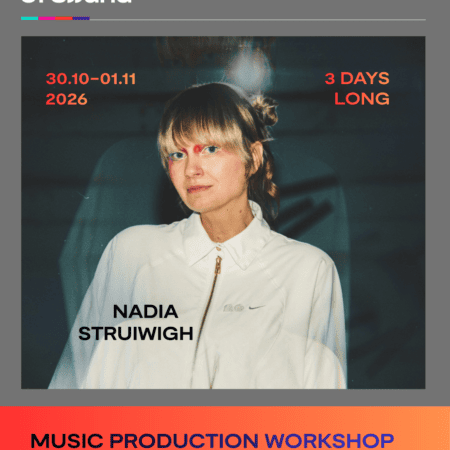
This semester adds something Semester 1 doesn’t have: Nadia Struiwigh — Tresor Berlin resident, Dekmantel artist, one of the most distinctive voices in European electronic music — joins the teaching roster for the first time.
Five disciplines
What the 12 sessions cover
| 3 × | Elektron machines |
| 3 × | Modular synthesis & improvisation |
| 3 × | Synth improvisation with Nadia Struiwigh |
| 2 × | Mixing & mastering in a professional studio |
| 1 × | Music theory for electronic music |
Dates
Tuesdays · 17:30–21:30
19.01 · 26.01 · 02.02 · 09.02 · 16.02 · 23.02 · 02.03 · 09.03 · 16.03 · 23.03 · 30.03 · 06.04.2027
12 sessions × 4 hours = 48 hours.
By the end of the semester you will
→ Have twelve recorded pieces instead of twelve unfinished projects
→ Be able to write and perform a full track on Elektron machines
→ Improvise on modular systems instead of only sequencing them
→ Know how to apply harmony, scales and chord progressions to your own work
→ Have built and rehearsed a live act
→ Have mixed and mastered your own material in a professional studio
→ Have a portfolio and demo reel you can actually send to labels and promoters
→ Have direct connections to Berlin’s electronic music scene
Course structure
Harmony, Scales & Composition
Igor Zavatsckii
Major and minor harmony. Chord construction — triads, 7ths, extended chords. Modal scales and how they shape mood. Common progressions in electronic music. Tension and release, and how to hear them while you play.
Elektron Machines: Sequencing & Sound
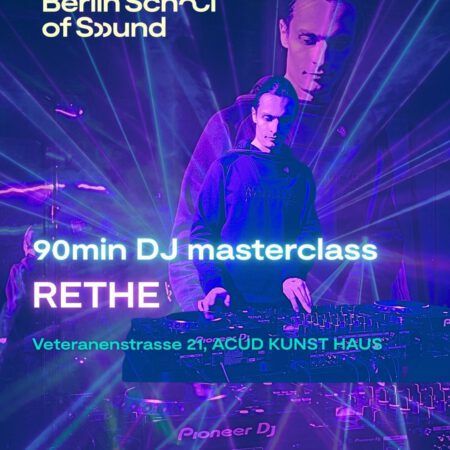
RETHE
The Elektron workflow — Digitakt, Digitone, Analog Rytm. Trig conditions and parameter locks. Why the sequencer changes what you write. Building your first pattern bank.
Elektron Machines: Writing a Track
RETHE
From pattern to arrangement. Song mode and scenes. Sampling into the machine. Processing and resampling. Getting a finished piece out of a box with no screen to hide behind.
Modular Synthesis & Improvisation: Foundations
Stéphane Lefrançois
Patching for playing rather than programming. Sequencing strategies, clock division, polyrhythms. Generative structures you can steer in real time. Recording what happens.
Modular Synthesis & Improvisation: Playing Together
Stéphane Lefrançois
Multi-person patching. Synchronising systems. Listening and responding in a group. Leaving space for someone else. Group project begins.
Synth Improvisation: Playing from Feeling
Nadia Struiwigh
Improvising on hardware synths without a plan. Choosing sounds that carry emotion. Trusting first takes. Knowing when a piece is saying what you meant.
Elektron Machines: Live Set
RETHE
Turning your patterns into a performable set. Clocking machines together and syncing with the laptop. Mutes, fills and transitions. Building something you can play without a safety net.
Modular Synthesis & Improvisation: Performing
Stéphane Lefrançois
Building a performable system. Feedback and controlled chaos. Modular effects processing. Practice, troubleshooting and what to do when a cable falls out mid-set.
Synth Improvisation: Hybrid Setups
Nadia Struiwigh
Combining synths, machines and laptop in one set. Reacting to a room. Building tension across a long form. Practical: improvised performance in class with feedback.
Synth Improvisation: Building Your Live Act
Nadia Struiwigh
Shaping your material into a 10–15 minute set. Transitions, dynamics and pacing. Rehearsal methods. Technical riders and what to expect from a club or venue.
Mixing at Sugar Candy Mountain Studio
Henning Grambow
Working on your own material in a professional studio. Gain staging and mix architecture. Depth, width and balance on full-range monitoring. Hands-on with outboard and the console.
Mastering & Release Preparation
Henning Grambow
Mastering chain architecture. LUFS and reference standards for club, streaming and vinyl. Preparing files for labels and distribution. Final feedback on each student’s track.
Final showcase at ACUD Kunsthaus — you perform your live act in front of an audience. Friends, family, Berlin’s music community.
Your instructors
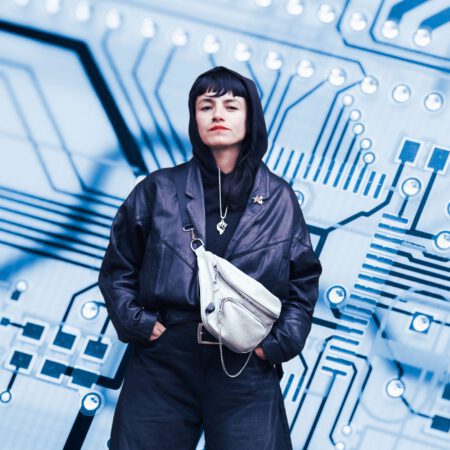
Nadia Struiwigh — 3 sessions · Synth improvisation
Dutch electronic musician, DJ and live performer based in Berlin. Tresor resident. Releases on Dekmantel, Central Processing Unit, Nous’klaer Audio, Blueprint and SPAT*R. Her work moves between ambient depth, jungle energy and hypnotic techno — always hardware, always intuition, always in motion.
RETHE — 3 sessions · Elektron machines
Berlin-based producer and live performer. Releases on ARTS, Illegal Alien and BCCO. Expert at track selection, storytelling through music, and hardware/software integration.
Stéphane Lefrançois — 3 sessions · Modular & improvisation
Drummer, recording engineer, performing artist and teacher based in Berlin. Studios in London, Ibiza and Berlin. Founder of Secret Music label.
Henning Grambow — 2 sessions · Mixing & mastering
Producer and mixing engineer, co-owner of Sugar Candy Mountain Studio in Berlin.
Igor Zavatsckii — 1 session · Music theory
Pianist and music theory educator. Leads the music theory module at Berlin School of Sound.
Your final project
→ Solo track — one complete piece (4–8 min), professionally mixed and mastered, with a written artist statement
→ Collaborative piece — one track made with fellow students (4–8 min)
→ Live act — 10–15 minutes at the final showcase at ACUD
→ Portfolio — updated artist bio, demo reel, SoundCloud or Bandcamp presence
What’s included
| 48 hours of instruction across 12 sessions |
| Nadia Struiwigh, RETHE, Stéphane Lefrançois, Henning Grambow and Igor Zavatsckii |
| Two sessions at Sugar Candy Mountain Studio |
| Maximum 10 participants |
| Full access to ACUD studio — Elektron machines, Eurorack systems, hardware synths and drum machines, Ableton Live 12 Suite, Genelec monitors, Universal Audio and RME interfaces, Push and Launchpad |
| Group critiques and peer feedback sessions |
| Public final showcase concert at ACUD Kunsthaus |
| Certificate of completion |
What you need to bring
Completion of Make Some Waves 1 or equivalent experience, basic Ableton Live knowledge, your own laptop with Ableton Live 10 or later, professional headphones, a USB drive for project backup, a notebook, and commitment to all 12 sessions.
Details
| Starts | Tuesday 19 January 2027 · 12 weeks |
| Time | Tuesdays 17:30–21:30 |
| Place | ACUD Kunsthaus, Veteranenstraße 21, 10119 Berlin-Mitte |
| Studio | Weeks 11–12 at Sugar Candy Mountain Studio |
| Group | Max 10 participants |
| Price | 1.100 € early bird until 15.12.2026, then 1.300 € |
| Language | English |
Frequently asked questions
Do I need to have finished Semester 1?
Not necessarily. You need equivalent experience: you should already be comfortable building a track in Ableton Live and know your way around basic synthesis. If you’re unsure, book a short call and we’ll work it out together.
Do I need to own Elektron machines or a modular system?
No. The school has its own machines and RETHE brings more to class. You only need your own laptop and headphones.
I keep starting tracks and never finishing them. Will this help?
That’s exactly what the format is for. You make something new every week, in the room, with a teacher next to you. By the end you have twelve pieces instead of twelve abandoned projects.
How much does the course cost?
1.100 € if you book by 15 December 2026, and 1.300 € after that. The price covers all 12 sessions, 48 hours of instruction, full studio access and the final showcase.
Where does the course take place?
At ACUD Kunsthaus, Veteranenstraße 21 in Berlin-Mitte. Weeks 11 and 12 take place at Sugar Candy Mountain Studio, a working professional studio in Berlin.
What language is the course taught in?
English. You don’t need German to take part.
How many people are in the group?
Maximum 10, never more. Small enough that every student gets heard and gets individual feedback every week.
What happens at the end?
A public showcase concert at ACUD Kunsthaus, where you perform your live act in front of an audience, plus a finished, mixed and mastered track and an updated portfolio.
Still have questions? Write to contact@berlinschoolofsound.com — we reply within 24 hours.
Reviews
There are no reviews yet.